
How to Organize a Coin Collection So the Numbers Mean Something
A collection you've recorded and a collection you can report on aren't the same thing. Five habits that close the gap, and how to catch what's missing.
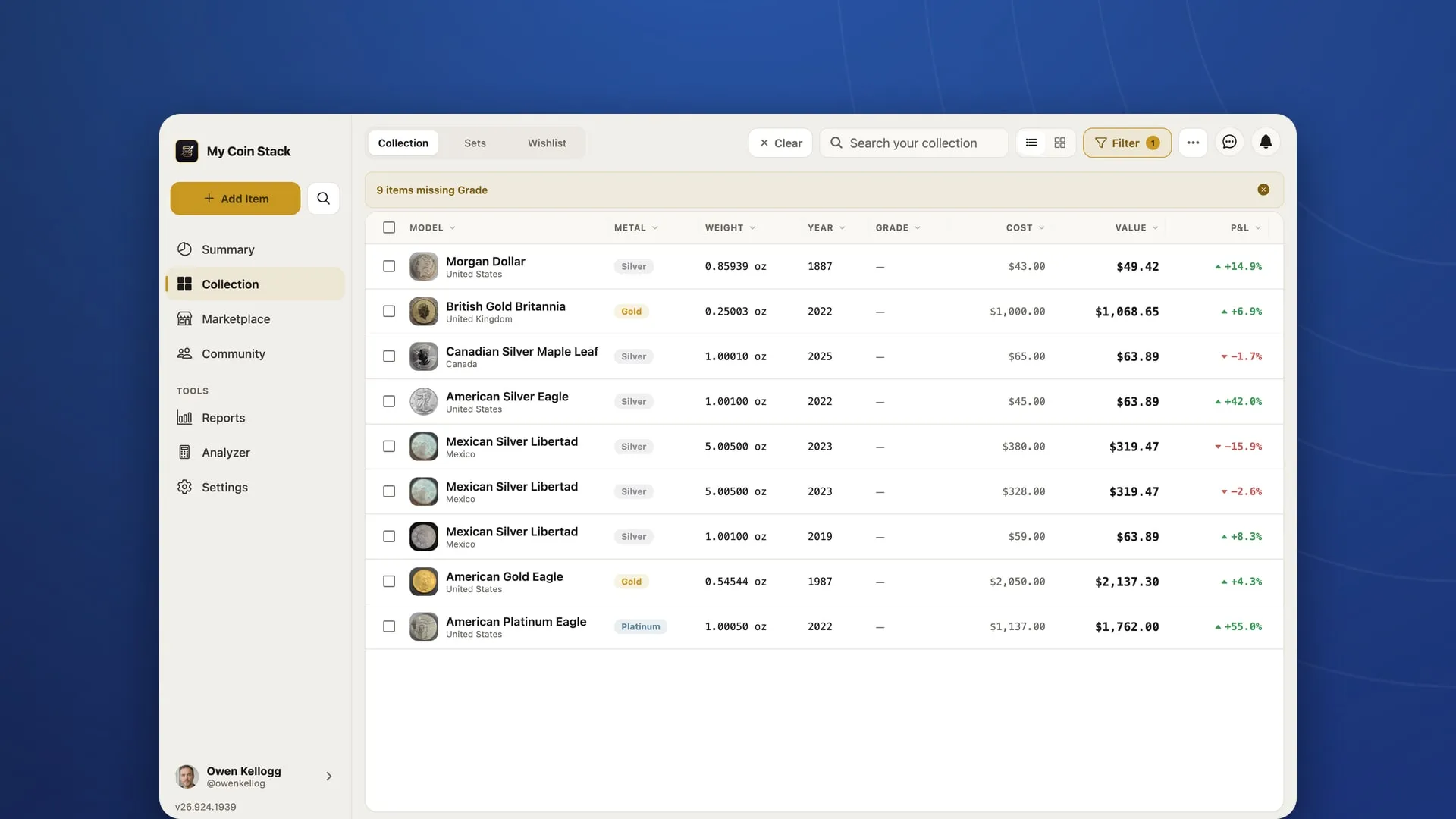
Most collections start the same way: a few coins, then a box, then a spreadsheet you meant to keep up to date. The coins are fine. It’s the records that fall behind, and they’re what every number you care about is built on: what it’s all worth, what you paid, whether you’re up or down.
Here are five habits that keep a collection reportable, whatever you use to track it.
1. Record what you paid, every time
Your cost basis, what you actually paid including any premium, is the one number you can’t look up later. Spot prices are public; your receipt isn’t. Without it you can see what a coin is worth, but not whether buying it was a good idea.
Record the price, the date, the vendor and the quantity when the coin arrives, not when you get round to it. Vendor matters more than it seems: over a year or two it tells you which dealers you really buy from, and what they’ve cost you.
2. Keep melt value and market value apart
A graded Morgan dollar and a generic silver round can hold similar amounts of silver and be worth wildly different amounts. If your records only track metal, collectible coins are undervalued; if they only track market price, your bullion is guessed at. Record the metal, weight and purity for every item so melt value can be calculated, and the grade, grading service and certification number for anything slabbed.
3. Photograph it once, properly
Obverse, reverse, and the slab label if there is one. Photos settle insurance questions, make selling easier, and are the fastest way to tell two similar coins apart in your own records.
4. Know where every coin physically is
A storage location on each record (which box, which safe, which page of which album) is what turns a list into an inventory. If your collection has outgrown one container, labels help even more: a printed label with a barcode on each flip or slab means you can scan it and pull up the record, rather than reading tiny dates under a lamp.
5. Archive, don’t delete
When you sell or trade a coin, mark it as sold and keep the record. Deleting it erases the purchase, the sale and any gain or loss along with it. A year later, “what did I sell that for?” is a question you’ll want answered.
Finding the gaps you already have
Even with good habits, older records have holes. The trick is to make them visible instead of trying to remember them.
In My Coin Stack, the Collection has data-quality filters that pull up every item missing a purchase price, a photo or a grade, with a banner telling you how many there are. The Quality view in Reports scores the completeness of your whole collection, buckets it into Good, Warning and Poor, and lists the specific items dragging it down. Fix the top of that list and every other report gets more accurate.
Bringing an existing spreadsheet with you
If your records already live in a spreadsheet, you don’t have to start again: My Coin Stack imports from CSV and Excel on every plan, and exports back to the same formats whenever you want them. Your data is never locked in. The support site has step-by-step guides for the import.
Once it’s in, the filters above will tell you exactly which records to finish first.
Keep reading
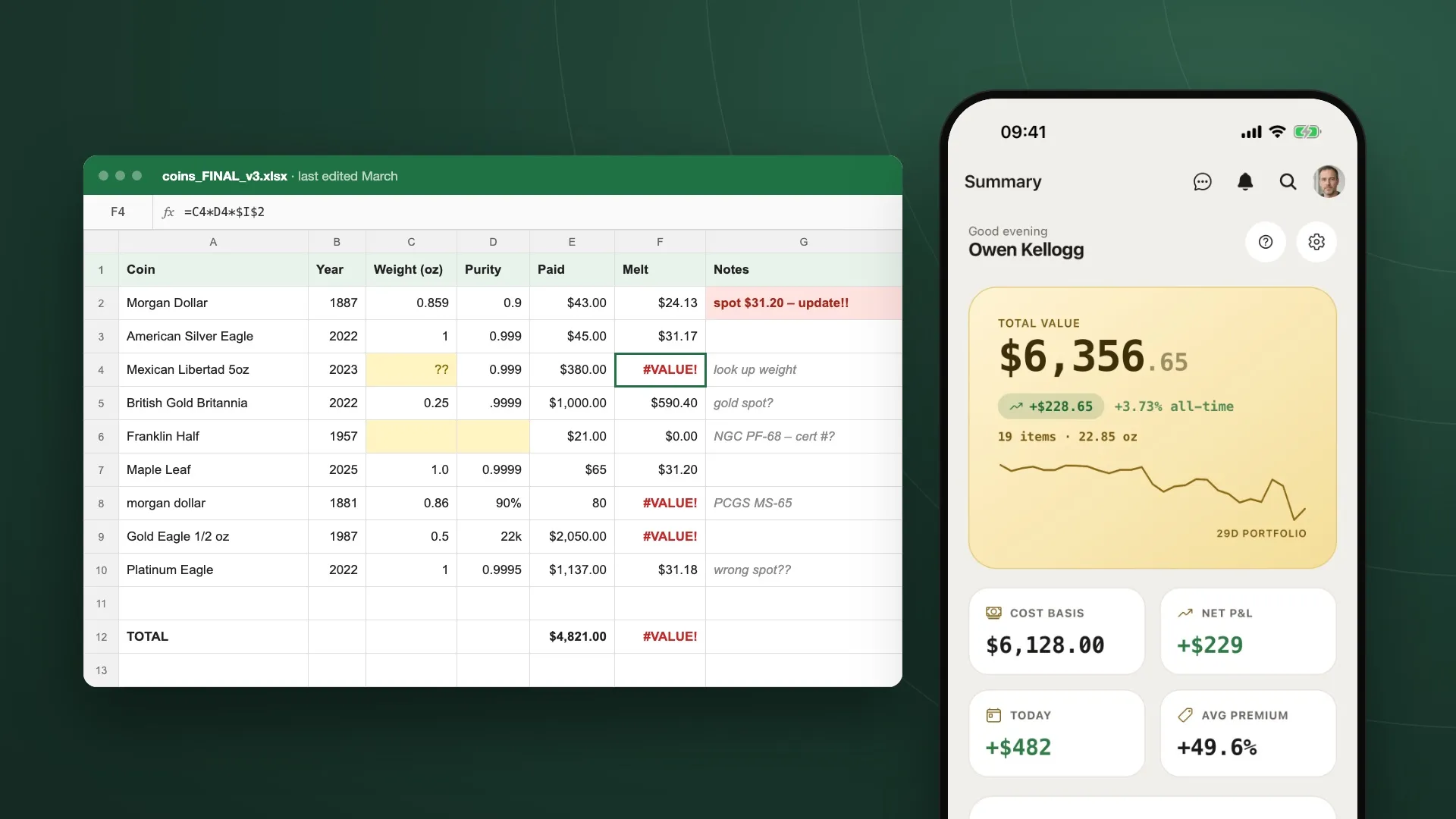
Coin Collection Spreadsheet vs. an App: What You Gain
Spreadsheets are where most collections start. Where they fall short: stale spot prices, hand-typed weights, fragile formulas, and a file stuck on one computer.
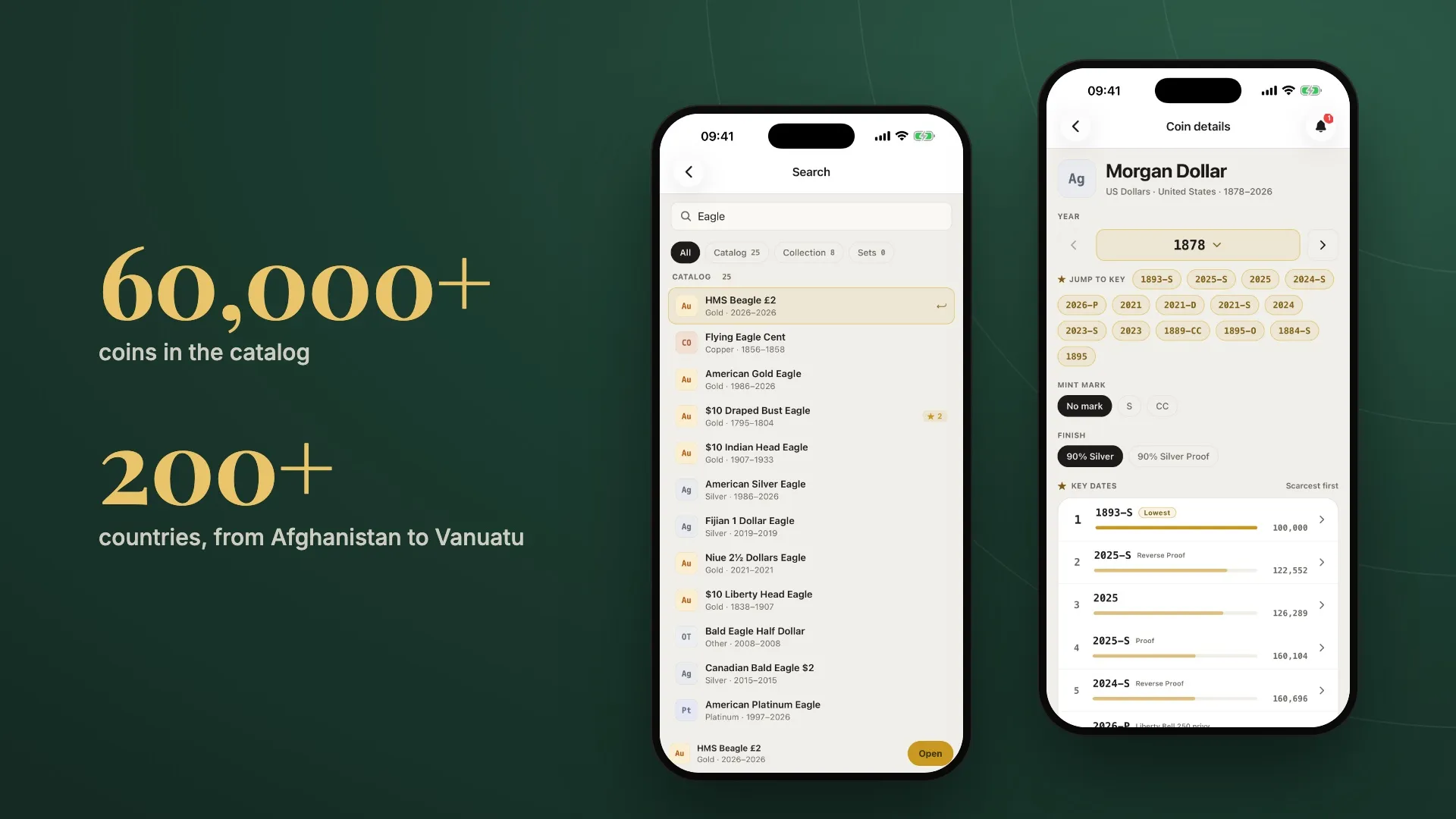
Inside the Catalog: 60,000+ Coins From 200+ Countries
One search covers more than 60,000 coins from over 200 countries, with mintages, key dates and design notes, plus weights that fill in when you add a coin.
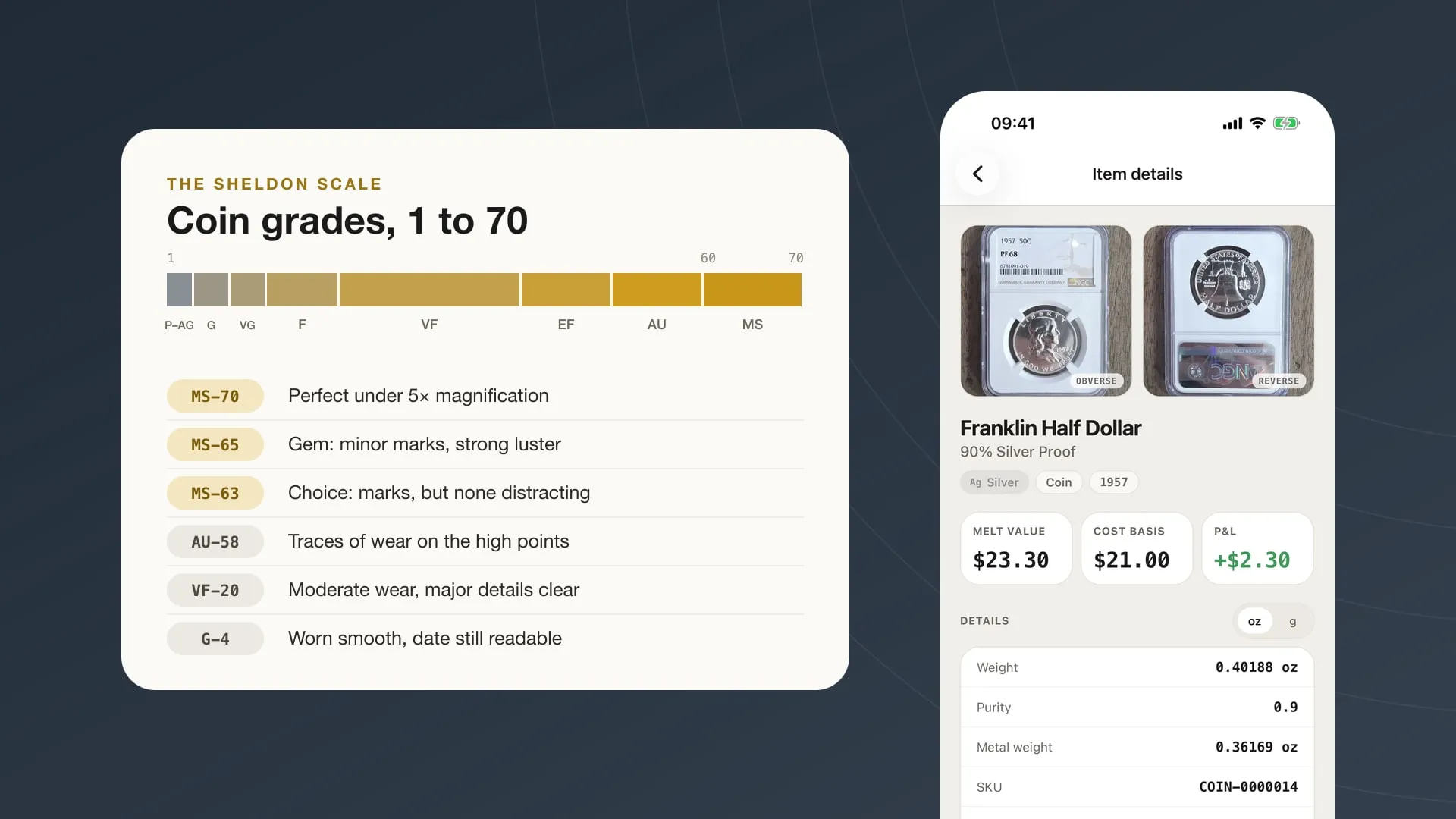
Coin Grading Basics: What MS-63, VF-20 and 'Details' Mean
How the 1–70 Sheldon scale works, what the letters and plus signs on a slab mean, when third-party grading is worth paying for, and how to record grades.

Put it to work on your own stack.
My Coin Stack is free in any browser, with no card required.