
How to Calculate the Premium Over Spot Before You Buy Bullion
The price on a coin is metal plus premium. Here's how to work out each part, compare offers of different sizes fairly, and decide what you're willing to pay.
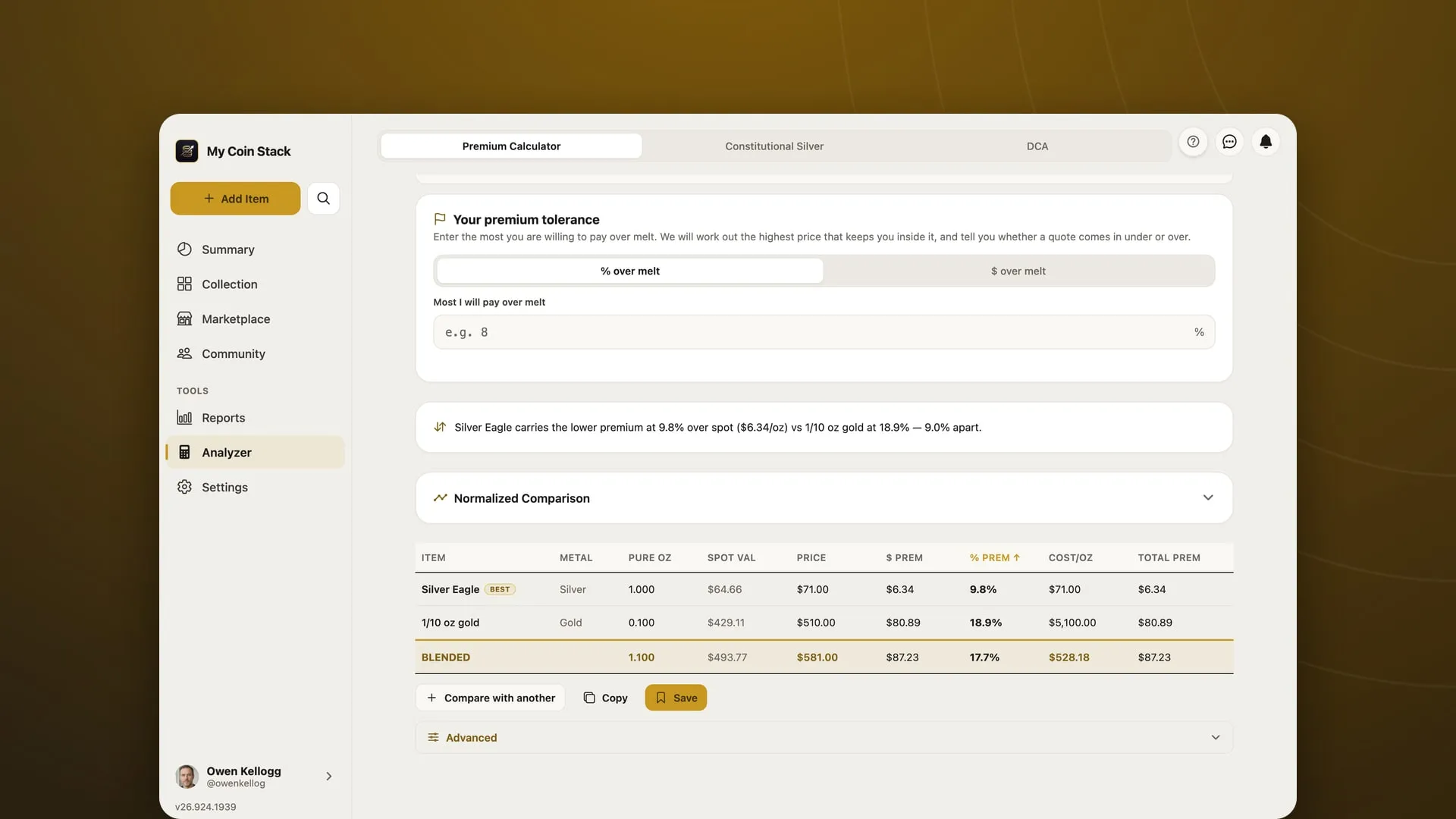
Every bullion price you’re quoted is two numbers added together: what the metal inside is worth, and everything else. That second number is the premium over spot, and it’s the part you have some control over. Knowing how to calculate it is the difference between buying metal and just buying whatever’s in front of you.
What “spot” actually means
The spot price is the current market price for one troy ounce of pure metal, traded in bulk. It moves all day while markets are open. Nobody sells a single coin at spot: spot is the benchmark the coin’s price is built on.
Two details trip people up:
- Troy ounces, not regular ounces. A troy ounce is 31.1035 grams; the ounce on your kitchen scale is 28.35. Precious metals are always priced in troy ounces.
- Pure metal, not total weight. Spot is priced per ounce of pure gold or silver. A coin that weighs one ounce but is 90% silver has 0.9 oz of silver in it.
Step 1: work out the melt value
Melt value is what the metal in the coin is worth at today’s spot:
Melt value = weight (troy oz) × purity × spot price
For most modern bullion the mint has done the first part for you. An American Silver Eagle contains exactly one troy ounce of fine silver, so its melt value is simply the silver spot price.
Gold is where the trap is. A one-ounce American Gold Eagle is 22-karat (91.67% gold) and weighs about 1.09 troy ounces in total, because it’s alloyed to be harder wearing. It still contains exactly one ounce of gold. Always calculate from the pure metal content, not the gross weight or the size stamped on the packaging.
Step 2: work out the premium
Once you know the melt value, the premium is the gap between it and the asking price:
Premium ($) = asking price − melt value
Premium (%) = premium ÷ melt value × 100
Here’s a worked example with illustrative prices. Silver spot is $64.66 and gold spot is $4,291.10:
| Item | Pure metal | Melt value | Asking price | Premium | Premium % |
|---|---|---|---|---|---|
| American Silver Eagle | 1.000 oz silver | $64.66 | $71.00 | $6.34 | 9.8% |
| 1/10 oz gold coin | 0.100 oz gold | $429.11 | $510.00 | $80.89 | 18.9% |
Step 3: compare offers by percentage, not price
A $71 coin and a $510 coin can’t be compared on price. They can be compared on premium percentage, or on cost per pure ounce (asking price ÷ pure ounces):
- The Silver Eagle costs $71.00 per ounce of silver, 9.8% over spot.
- The 1/10 oz gold coin costs $5,100 per ounce of gold, 18.9% over spot.
The premium percentage puts both on the same scale: on these numbers, you’re paying almost twice as much over the metal for the small gold coin.
Why some products carry bigger premiums
Premiums aren’t random. A few things push them up or down:
- Size. Minting, packaging and handling cost roughly the same per piece whatever it weighs, so fractional coins (1/10 oz, 1/4 oz) carry much higher percentage premiums than one-ounce coins, and large bars carry the lowest.
- Product type. Government-minted coins usually cost more than generic rounds and bars from private refiners. You’re paying for recognition and easier resale.
- Demand. When demand spikes, premiums widen even if spot doesn’t move.
- How you pay and ship. Many dealers price card payments higher than bank wire or check, and shipping on a small order can add several percent.
Set your tolerance before you shop
The most useful habit is deciding in advance what premium you’ll accept for each kind of product: say, 8% on one-ounce silver coins and 4% on gold bars. Then any quote is a quick yes or no rather than a judgement call made while the “buy now” button is staring at you.
Keep in mind that the premium is mostly a cost, not an investment. When you sell common bullion back to a dealer, you’ll typically get a price near spot rather than the full premium you paid, so a lower premium going in is real money kept.
Doing it in My Coin Stack
The Buy Analyzer does all of the above against live spot prices. Enter the metal, weight, purity and asking price for each offer you’re considering, and it returns melt value, premium in dollars and percent, and cost per pure ounce, then names the best deal in plain language.
You can set your own premium tolerance so each offer is color-coded against your idea of a fair price, normalize every option to the same quantity, or enter a budget and see how much of each it buys. If spot moves while you’re deciding, lock it so the numbers hold still.
This article is general information about how bullion is priced, not financial advice.
Keep reading
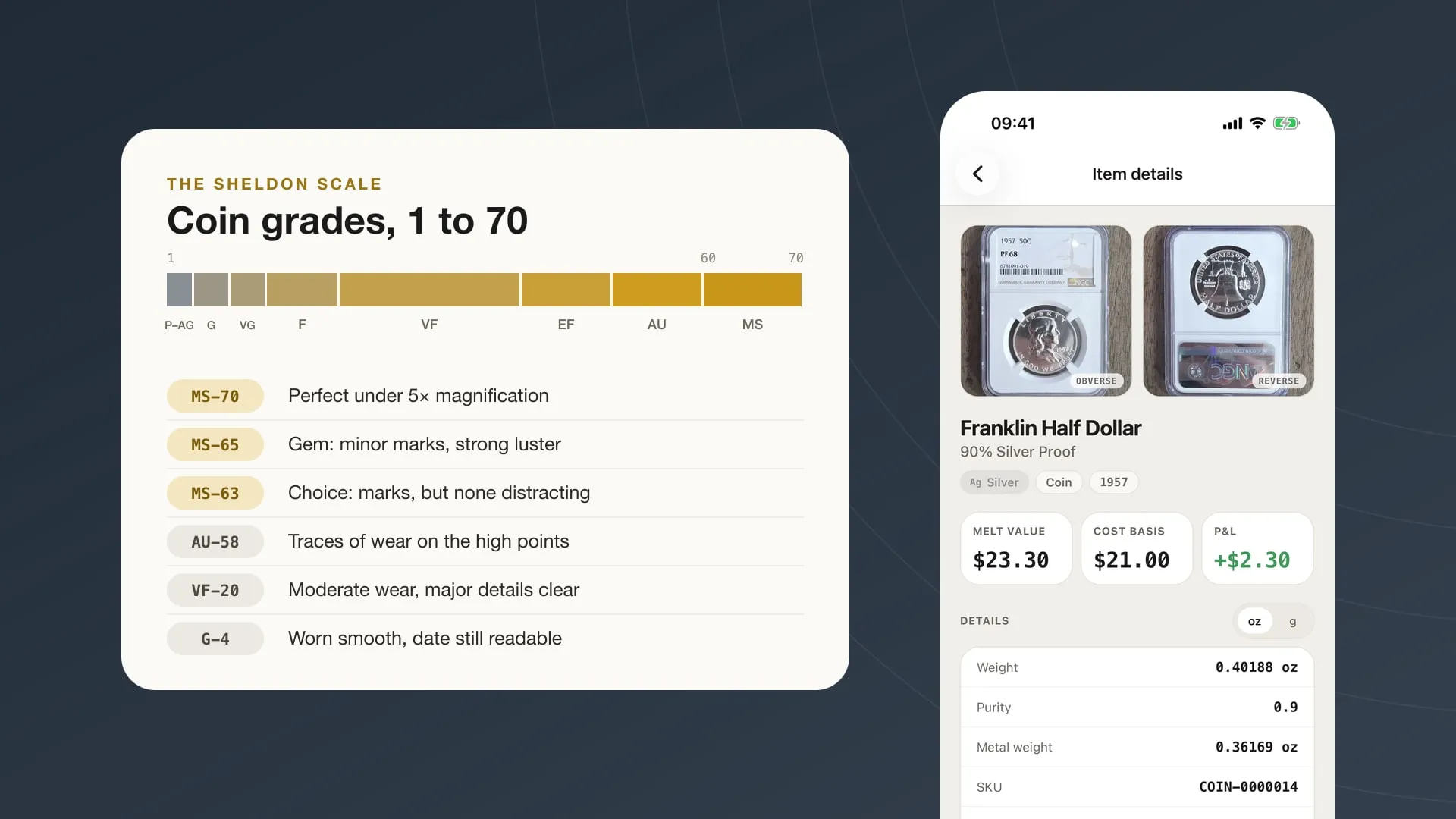
Coin Grading Basics: What MS-63, VF-20 and 'Details' Mean
How the 1–70 Sheldon scale works, what the letters and plus signs on a slab mean, when third-party grading is worth paying for, and how to record grades.
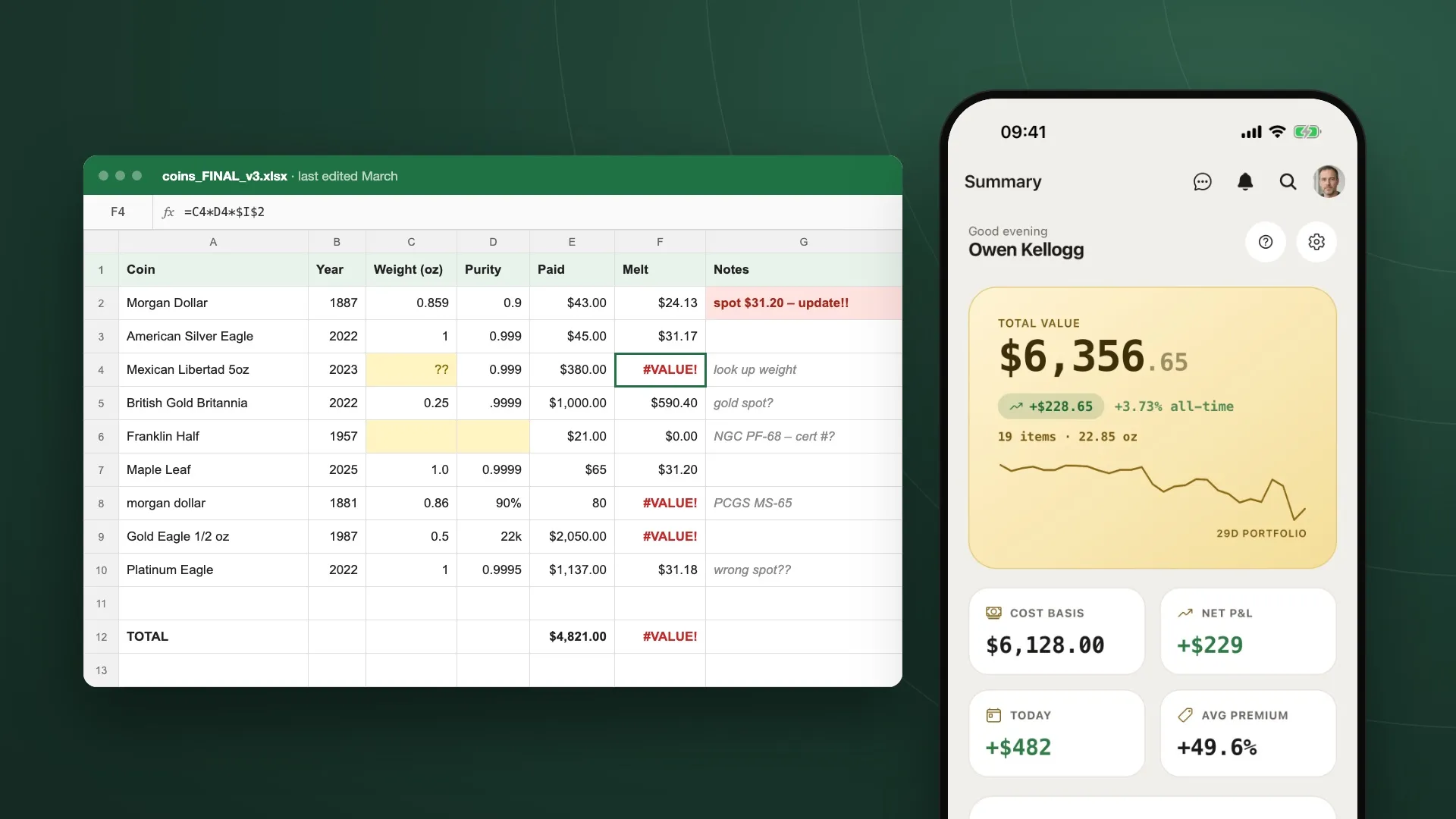
Coin Collection Spreadsheet vs. an App: What You Gain
Spreadsheets are where most collections start. Where they fall short: stale spot prices, hand-typed weights, fragile formulas, and a file stuck on one computer.
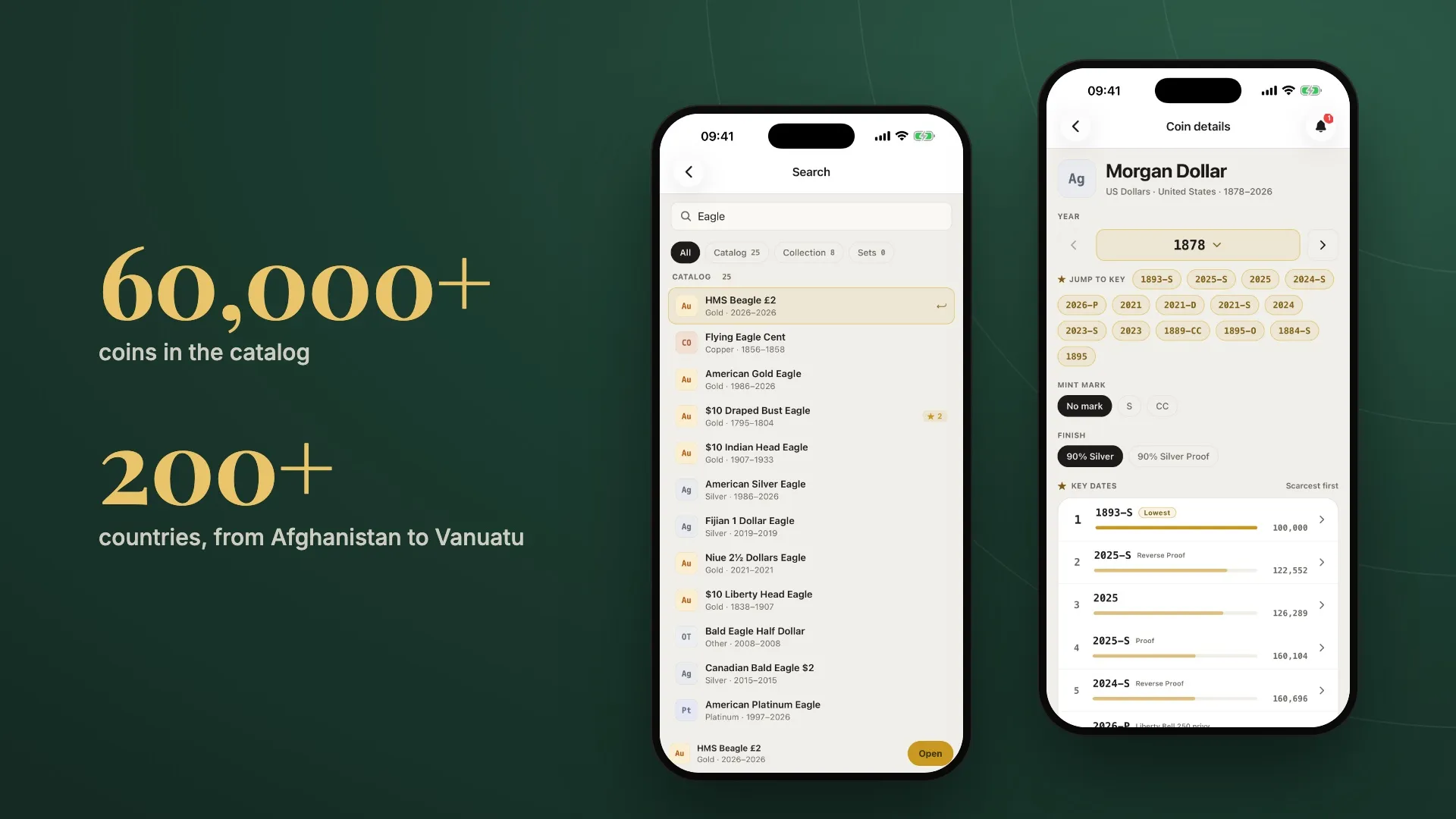
Inside the Catalog: 60,000+ Coins From 200+ Countries
One search covers more than 60,000 coins from over 200 countries, with mintages, key dates and design notes, plus weights that fill in when you add a coin.

Put it to work on your own stack.
My Coin Stack is free in any browser, with no card required.